EV Charger Installation Cost Guide for Thousand Oaks, Agoura Hills, and the Conejo Valley — 2026
4.8 Star Google Rating|23+ Years Experience|10,000+ Homes Served|Licensed CA Contractor #1010883|BBB A+ Accredited
Quick answer — what most homeowners pay
Most homeowners in Thousand Oaks and Agoura Hills pay $500 to $1,500 in labor and permit fees for a Level 2 EV charger installation in an attached garage with a 200-amp panel that has available capacity. Add $300 to $600 for the charger hardware. If your home has a 100-amp panel or a full panel — common in Thousand Oaks homes built before 1987 — add $2,500 to $5,000 for a panel upgrade. The SCE Charge Ready Home rebate covers up to $4,200 of that panel upgrade cost for qualifying households. The federal 30C tax credit covers 30% of your charger installation cost up to $1,000 and expires June 30, 2026.This guide breaks down every cost variable so you know exactly what to expect before you call an electrician. DNZ Electrical Services is a Tesla Wall Connector certified, EVITP certified, and SCE Approved Contractor serving Thousand Oaks, Agoura Hills, Calabasas, Westlake Village, Moorpark, and all of LA and Ventura County. CA License #1010883.
EV charger installation cost in Thousand Oaks and Agoura Hills — 2026
Standard Level 2 install — attached garage, 200-amp panel with space: $800 to $2,100 total
Long wire run — panel far from garage, 50+ feet: $1,500 to $2,800 total
Detached garage requiring trenching: $2,200 to $3,800 total
Two EV chargers with Power Management — shared circuit: $1,800 to $3,200 total
Panel upgrade required (100-amp to 200-amp): $2,500 to $5,000 additional
Panel upgrade + EV charger combined: $3,500 to $7,000 total before rebates. Lore on Panel Upgradr For Ev Charger
SCE Charge Ready Home rebate (income-qualified): Minus up to $4,200
SCE Charge Ready Home rebate (geographic-based): Minus up to $2,100
Federal 30C tax credit (expires June 30, 2026): Minus up to $1,000
DNZ service assessment fee: $85 regular · $125 emergency · both waived when work done
✅ For income-qualified households in the SCE service area, the panel upgrade and EV charger combined can cost as little as $245 out of pocket after the SCE rebate and 30C tax credit are applied.
What drives EV charger installation cost up or down
The 6 factors that determine what you pay
Every EV charger installation is different. The same charger costs $800 in one home and $3,500 in another. Here is what drives the difference:
Factor 1 — Your electrical panel
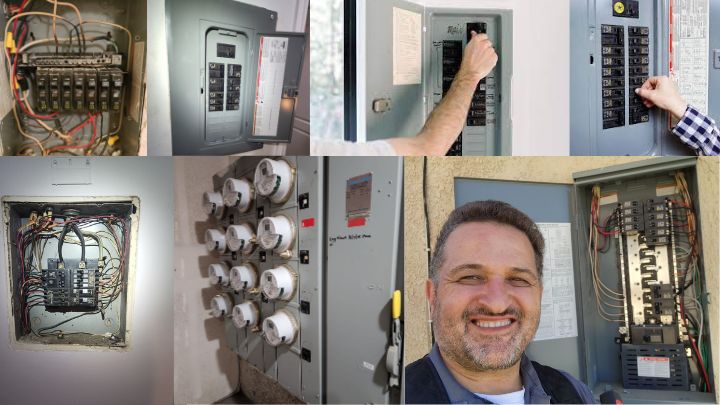
This is the single biggest cost variable. If your home has a 200-amp panel with at least one open 60-amp slot, the installation is straightforward — DNZ adds a dedicated circuit and the job is done. If your panel is 100 amps, full, or a known hazard brand like Federal Pacific or Zinsco, a panel upgrade is needed before the EV charger can be safely installed.Electrical Panel upgrades run $2,500 to $5,000 in the Thousand Oaks and Agoura Hills area.Most Conejo Valley homes built before 1987 have 100-amp panels. If your home was built in the 1970s or early 1980s, there is a good chance you will need a panel upgrade. DNZ assesses your panel on the same visit as the charger installation quote — no second trip.
Factor 3 — Attached vs detached garage
An attached garage is almost always the most straightforward installation. A detached garage requires running wire underground — trenching through your yard, installing conduit, and backfilling. This adds $500 to $1,500 to a standard installation depending on the distance and surface type. If your driveway is concrete or pavers the trenching cost increases. DNZ handles all trenching and underground work in-house.
Factor 5 — Charger hardware
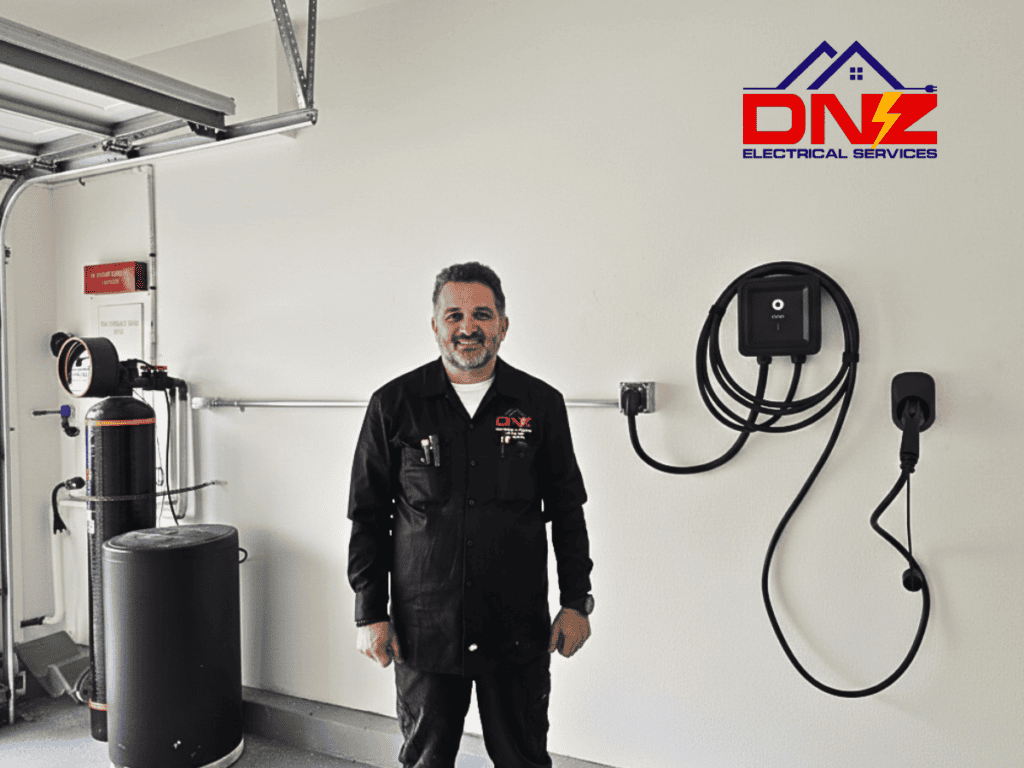
The charger hardware is separate from the installation labor. Hardware costs range from $300 to $600 for most Level 2 chargers. The Tesla Wall Connector Gen 3 costs $445 and is sold directly through Tesla. The Tesla Universal Wall Connector costs $600. Third-party Level 2 chargers from ChargePoint, JuiceBox, and Emporia run $300 to $1500. DNZ installs all brands — we do not supply the hardware so you are never paying a markup on equipment.Learn more about Tesla Wall Connector installation
Factor 6 — Number of vehicles
If you have two EVs and want both to charge overnight, you have two options. Two separate 60-amp circuits — one per charger — is the cleanest solution but adds cost if your panel needs the capacity. Two Tesla Wall Connectors on a shared circuit using Power Management is a more affordable option that shares available capacity intelligently. DNZ configures Power Management on all multi-vehicle installs.
Factor 2 — Distance from panel to charger location
The further your electrical panel is from where the charger will be mounted, the more wire, conduit, and labor the job requires. A standard 20 to 30 foot run from a panel in the garage to a wall-mounted charger is the simplest and cheapest scenario. A 60 to 70 foot run across a finished interior — through walls, attic space, or under floors — adds significant labor cost and may require drywall patching. DNZ measures every run during the assessment and includes it in the firm price.
Factor 4 — Permit fees
Every EV charger installation in Thousand Oaks, Agoura Hills, Calabasas, Westlake Village, and surrounding cities requires a permit. Permit fees vary by city but typically run $75 to $200 for a standard EV charger circuit. DNZ pulls all permits and coordinates all inspections on your behalf — permit fees are included in the price we quote.
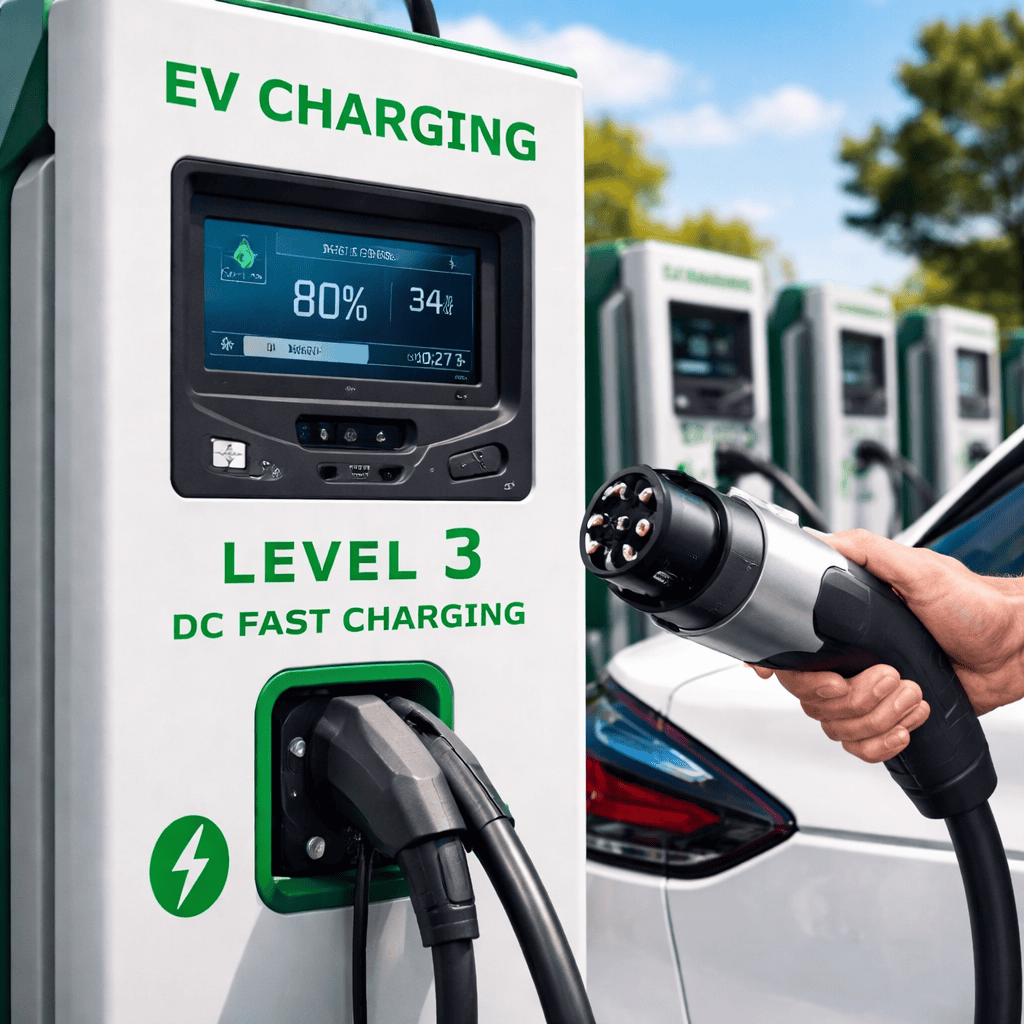
Level 3 / DC Fast Charging — NOT available for home installation
- Industrial power — requires three-phase commercial electrical service
- Charges to 80% in 20 to 30 minutes
- Found at public charging stations, dealerships, and commercial properties
- Cannot be installed in a single-family home — infrastructure requirements are too large
- Not what you need at home — Level 2 is the right solution
EV brands and charger types DNZ installs
DNZ Electrical Services installs Level 2 home chargers for all major electric vehicle brands. We are Tesla Wall Connector certified and EVITP certified — two of the most recognized credentials in the EV charger installation trade.
Tesla Wall Connector — certified installer
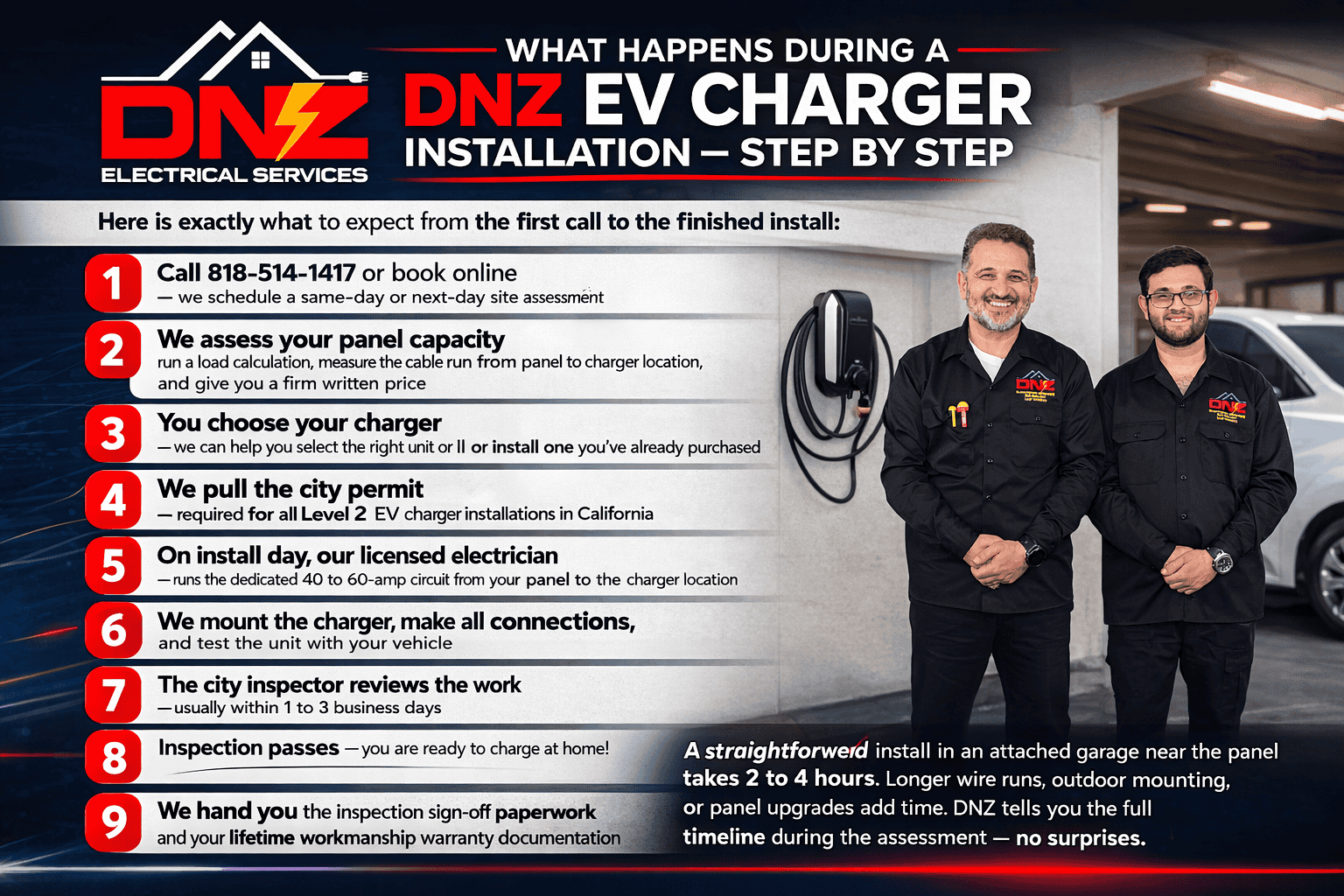
DNZ Electrical Services is listed on Tesla's certified installer network. We install the Tesla Wall Connector for Model S, Model 3, Model X, Model Y, and Cybertruck. We handle the placement, circuit sizing, permit, and inspection. Most Tesla Wall Connector installs in the Agoura Hills and Thousand Oaks area take 2 to 4 hours.
Ford, Rivian, Chevy, BMW, Hyundai, Volkswagen, and all other EVs
All modern EVs use the same J1772 standard connector for Level 2 charging — except Tesla, which now also uses the NACS connector on newer models. DNZ installs universal Level 2 charging stations that work with all brands, as well as brand-specific chargers. If you're not sure what charger your vehicle needs, call 818-514-1417 and we'll walk you through it.
What real EV charger installations cost
Scenario 1 — Standard attached garage install, 200-amp panel
The most common situation in newer Conejo Valley homes. Panel has a 200-amp service with room for a new 60-amp breaker. Charger mounts on the garage wall within 20 to 30 feet of the panel. No conduit through finished walls required.
Labor and permit: $500 to $900
Charger hardware (Level 2, your choice of brand): $300 to $600
Total out of pocket: $800 to $1,500
After 30C tax credit: $0 to $500 back
Timeline: 2 to 4 hours — done in one visit
Scenario 3 — Detached garage with trenching
Charger mounts in a detached garage or on an exterior wall away from the house. Wire must run underground through conduit. Trenching cost depends on distance and surface — grass is cheaper than concrete or pavers.
Labor, trenching, and permit: $1,500 to $2,500
Charger hardware: $300 to $600
Total out of pocket: $1,800 to $3,100
After 30C tax credit: $800 to $2,100 net
Timeline: Full day
Scenario 5 — Tesla Wall Connector, standard install
Tesla Model Y or Model 3 owner in an attached garage, 200-amp panel with room. Purchases Gen 3 Wall Connector directly from Tesla at $445. DNZ installs the 60-amp dedicated circuit and commissions the Wall Connector including WiFi setup.
Tesla Wall Connector Gen 3 hardware: $445
DNZ labor, permit, and commissioning: $500 to $900
Total out of pocket: $945 to $1,345
After 30C tax credit: $0 to $345 net
Timeline: 2 to 4 hours
Scenario 2 — Long interior run, finished home
Panel is on the opposite side of the house from the garage. Wire must run through finished walls, attic space, or under flooring. More labor time, heavier wire gauge for the longer run, possible minor drywall patching.
Labor and permit: $900 to $1,500
Charger hardware: $300 to $600
Total out of pocket: $1,200 to $2,100
After 30C tax credit: $200 to $1,100 net
Timeline: 4 to 6 hours
Scenario 4 — Panel upgrade required, 100-amp to 200-amp
Common in Thousand Oaks and Agoura Hills homes built in the 1970s. Existing 100-amp panel cannot safely support an EV charger circuit. DNZ upgrades to a 200-amp panel and installs the EV charger circuit on the same day in most cases.
200-amp panel upgrade: $2,500 to $5,000
EV charger circuit and install: $500 to $900
Charger hardware: $300 to $600
Gross total: $3,300 to $6,500
SCE Charge Ready Home rebate (if income-qualified): Minus up to $4,200
Federal 30C tax credit: Minus up to $1,000
Net out of pocket (income-qualified): $100 to $1,300
Timeline: Full day
Learn about the SCE Charge Ready Home rebate

Contact Us
By clicking "Submit", you agree to DNZ Electrical Services Terms of Use and Privacy Policy. You consent to receive phone calls and SMS messages from DNZ Electrical Services to provide updates on your order and/or for marketing purposes. Message frequency depends on your activity. You may opt-out by texting "STOP". Message and data rates may apply.
We offer financing
We’ve partnered with Wisetack to offer our customers flexible financing options, so you can pay over time rather than all at once. The application takes about a minute to complete, and checking your options does not impact your credit score.
Finance projects up to $25,000*
Terms from 3 to 120 months*
APRs from 0 to 35.9%*
No hidden fees or compounding interest
Prequalify today with no impact to your credit and contact us to learn about financing your next project!
*All financing is subject to credit approval. Your terms may vary. Payment options through Wisetack are provided by our lending partners. For example, a $1,200 purchase could cost $104.89 a month for 12 months, based on an 8.9% APR, or $400 a month for 3 months, based on a 0% APR. Offers range from 0-35.9% APR based on creditworthiness. State interest rate caps may apply. No other financing charges or participation fees. See additional terms at https://wisetack.com/faqs
How to reduce your EV charger installation cost in 2026
Programs can significantly reduce what you pay. Here is how each one works and whether you qualify:
Program 1 — Federal 30C Tax Credit — Up to $1,000
The Alternative Fuel Vehicle Refueling Property Credit covers 30% of your EV charger installation cost, up to $1,000 back on your federal taxes. This applies to the installation labor and permit cost — not the charger hardware separately purchased. The credit is claimed on IRS Form 8911 when you file your federal tax return.
- Who qualifies: Any homeowner who installs a Level 2 EV charger at their primary residence
- How much: 30% of installation cost, maximum $1,000
- Expires: June 30, 2026 — this is a hard deadline
- DNZ provides: Itemized receipt of installation costs for your tax filing
⚠️ The 30C credit expires June 30, 2026. If you are planning to install a charger this year, schedule now. DNZ is already booking May and June. Call 818-514-1417.
Program 2 — SCE Charge Ready Home Rebate — Up to $4,200
Southern California Edison's Charge Ready Home program provides rebates toward electrical panel upgrades needed for EV charger installation. DNZ is an SCE Approved Contractor and handles the entire application process on your behalf.
- Income-qualified rebate: Up to $4,200 — covers 100% of panel upgrade cost for households earning below 80% of area median income or enrolled in CARE, Medi-Cal, CalFresh, or similar programs
- Geographic-based rebate: Up to $2,100 — for residents in designated Disadvantaged Communities regardless of income
- Requirement: Existing panel must be below 200 amps — must upgrade to 200-amp panel
- Requirement: Must install Level 2 charger within 180 days of panel upgrade
- DNZ handles: Full application, documentation, and coordination with SCE
Is a Level 2 charger worth the cost?
Level 1 vs Level 2 home charging — the real cost comparison
Every EV comes with a Level 1 charging cable that plugs into a standard 120V outlet. Many homeowners wonder whether upgrading to a Level 2 charger is worth the installation cost. Here is the honest comparison:
Level 1 charging — the included cable
Outlet required: Standard 120V household outlet
Range added per hour: 3 to 5 miles
Time to recover 60 miles of driving: 12 to 20 hours
Installation cost: $0 — uses existing outlet
Best for: Plug-in hybrids with small batteries, occasional EV users
Problem: Cannot fully recover typical daily driving overnight for most EVs
Level 2 charging — home EV charger
Circuit required: Dedicated 240V, 60-amp circuit
Range added per hour: 20 to 44 miles depending on charger and vehicle
Time to recover 60 miles of driving: 1.5 to 3 hours
Installation cost: $800 to $2,100 total before rebates
Best for: Any EV owner who drives 30 or more miles per day
Return on investment: Pays back through avoided public charging fees in 12 to 24 months for typical drivers
The math is straightforward. If you charge at public Level 2 stations at $0.25 to $0.40 per kWh and could be charging at home at your SCE rate of $0.25 per kWh off-peak — a home charger pays for itself quickly for most daily drivers. Add the 30C tax credit and the payback period is even shorter.
✅ Most Thousand Oaks and Agoura Hills EV owners who drive 40 or more miles daily recover their Level 2 charger installation cost within 18 months through avoided public charging fees.
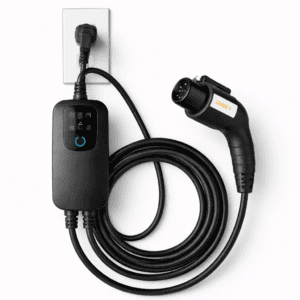
How much does the EV charger hardware cost?
The charger hardware is separate from the installation labor. DNZ does not supply charger hardware — you purchase the unit directly from the manufacturer or a retailer and DNZ installs it. Here is what each major option costs in 2026:
Tesla Wall Connector Gen 3 (NACS, Tesla vehicles): $445 from Tesla directly
Tesla Universal Wall Connector (NACS + J1772, all EVs): $600 from Tesla directly
ChargePoint Home Flex (32-amp, plug-in or hardwired): $350 to $450
JuiceBox 40 (40-amp, smart charging): $350 to $430
Emporia Level 2 Smart Charger (48-amp): $300 to $380
Grizzl-E Level 2 Charger (40-amp, outdoor rated): $300 to $360
For Tesla owners the Gen 3 Wall Connector is the best value — purpose-built for Tesla vehicles, 48-amp output, 4-year warranty, and $155 cheaper than the Universal Wall Connector. If you have a mix of Tesla and non-Tesla vehicles in your household, the Universal Wall Connector's integrated J1772 adapter eliminates the need for a separate adapter.
For non-Tesla EV owners — Ford F-150 Lightning, Rivian, BMW iX, Hyundai Ioniq 6 — the ChargePoint Home Flex or JuiceBox 40 are the most commonly installed units in the Conejo Valley. DNZ installs all brands.
Why choose DNZ Electrical Services for EV charger installation
EVITP certified — the gold standard for EV charger installers
EVITP stands for Electric Vehicle Infrastructure Training Program. It is the nationally recognized certification for electricians who specialize in EV charging infrastructure. DNZ holds this certification. Most electricians who offer EV charger installation do not.EVITP certification verification →

Tesla Wall Connector certified — listed on Tesla's installer network
DNZ is a Tesla-certified installer. When you look up certified installers on Tesla's website, DNZ appears in the results for our service area. Tesla certification means we've been trained and approved by Tesla to install Wall Connector home charging equipment to Tesla's standards. It also means your Wall Connector warranty stays intact.Tesla certified installer lookup →
SCE Approved Contractor — we get you rebates others can't
DNZ is an approved contractor in Southern California Edison's Charge Ready Home program. This means we can help qualifying customers apply for up to $4,200 in rebates for panel upgrades tied to EV charger installation. To access these rebates, your contractor must be on SCE's approved list. DNZ is. Most local electricians are not.SCE Charge Ready Home program →

Lifetime workmanship warranty on all labor
Every EV charger DNZ installs comes with a lifetime workmanship warranty. If anything we installed ever fails because of our workmanship, we come back and fix it at no charge — for as long as you own your home. Most electricians offer one year. We offer a lifetime.California CSLB license lookup →
EV charger installation across LA and Ventura County
DNZ Electrical Services installs home EV chargers throughout the following cities. Our shop is at 5627 Kanan Rd, Agoura Hills — central to the Conejo Valley and Ventura County.
Thousand Oaks | Agoura Hills | Calabasas | Westlake Village | Moorpark | Oak Park | Simi Valley | Camarillo | Ventura | Oxnard | Malibu | Woodland Hills | West Hills | Chatsworth | Northridge | Van Nuys | Canoga Park
Check Our Service Area Page for additional city coverages.
EV charger installation in Thousand Oaks
DNZ Electrical Services installs Level 2 home EV chargers throughout Thousand Oaks, CA. We are EVITP certified and Tesla Wall Connector certified. We work with the City of Thousand Oaks permit office and pull all required permits for EV charger installations. Most Thousand Oaks EV charger installation cost $900 to $2,500 in labor and permit fees and take 2 to 4 hours. Call 818-514-1417 for a same-day assessment.
EV charger installation in Agoura Hills
DNZ is based in Agoura Hills at 5627 Kanan Rd Suite 200. We have been installing EV chargers in Agoura Hills since the technology became mainstream for residential use. We know the local permit process and SCE coordination requirements for this area. California license B and C10, number 1010883.
EV charger installation in Calabasas, Westlake Village, and Moorpark
DNZ Electrical Services installs home EV chargers in Calabasas, Westlake Village, Moorpark, and surrounding cities. We handle permits, SCE coordination, and city inspections for all installations. Call 818-514-1417 or Contact Us to schedule.
Questions ask about EV charger installation cost
Q: How much does EV charger installation cost in Thousand Oaks or Agoura Hills in 2026?
In Thousand Oaks and Agoura Hills, most Level 2 EV charger installations cost $800 to $2,100 total including hardware, labor, and permit fees for a straightforward attached garage install with a 200-amp panel. If your home has a 100-amp panel and needs a panel upgrade first, add $2,500 to $5,000. The SCE Charge Ready Home rebate covers up to $4,200 of that panel upgrade cost for qualifying households. The federal 30C tax credit covers up to $1,000 of installation costs and expires June 30, 2026. DNZ Electrical Services is an SCE Approved Contractor and Tesla certified installer serving the Conejo Valley
Q: What is the cheapest way to install a home EV charger?
The cheapest EV charger installation is a hardwired Level 2 charger in an attached garage on a home with a 200-amp panel that already has available capacity. In Thousand Oaks and Agoura Hills this typically runs $800 to $1,200 total including hardware. Doing multiple installs in one visit — for example adding a second charger at the same time as the first — also reduces the per-unit cost since the service assessment fee is shared. The 30C federal tax credit can return up to $1,000 of installation costs, making the net cost significantly lower for most homeowners.
Q: Does installing an EV charger increase home value?
Yes. In the Conejo Valley market where EV ownership is high, a permitted and installed Level 2 home charger is increasingly considered a standard amenity by buyers. Homes without EV charging infrastructure are at a disadvantage in a market where 15 to 20% of buyers already own an EV. A properly permitted installation also appears in the home's permit history — evidence that the work was done correctly — which matters during home sales inspections.
Q: Is there a tax credit for installing a home EV charger in 2026?
Yes. The federal 30C Alternative Fuel Vehicle Refueling Property Credit covers 30% of your EV charger installation cost up to $1,000 back on your federal taxes. This credit expires June 30, 2026. It applies to the installation labor and permit cost. DNZ Electrical Services provides an itemized receipt for your tax filing. Southern California Edison also offers the Charge Ready Home rebate of up to $4,200 for qualifying homeowners who need a panel upgrade before the charger installation. DNZ is an SCE Approved Contractor
Do I need a permit to install a home EV charger in Thousand Oaks or Agoura Hills?
Yes. All hardwired Level 2 EV charger installations require a permit in Thousand Oaks, Agoura Hills, Calabasas, Westlake Village, and all surrounding cities. Permit fees typically run $75 to $200. Unpermitted installations can void your charger warranty, create insurance issues, and appear as defects on home sales inspections. DNZ pulls all permits and coordinates all inspections on your behalf. Permit fees are included in the price we quote.
Q: How much does a panel upgrade cost if I need one for my EV charger?
Panel upgrades in Thousand Oaks and Agoura Hills typically run $2,500 to $5,000 for a 200-amp service upgrade. The final cost depends on your existing panel, city permit fees, and whether SCE coordination is needed. The SCE Charge Ready Home rebate covers up to $4,200 of this cost for income-qualified households. DNZ handles the panel upgrade and EV charger installation in the same day in most cases
Q: Are you a Tesla-certified EV charger installer?
Yes. DNZ Electrical Services is a Tesla Wall Connector certified installer. We are listed on Tesla's certified installer network for our service area. This means we've been trained and approved by Tesla to install Wall Connector equipment to Tesla's standards, and your Wall Connector warranty remains intact with a certified install.
Q: Can I install an EV charger myself to save money?
California law requires all hardwired electrical work including EV charger circuit installation to be performed by a licensed electrical contractor. A DIY installation will not pass city inspection, will void the charger manufacturer's warranty, and may affect your homeowner's insurance coverage. Additionally the 30C federal tax credit and SCE Charge Ready Home rebate both require professional installation with permits. DNZ's $85 assessment fee is waived when you move forward — the savings from DIY are not worth the risk.